How to Overcome the Biggest eCommerce Development Challenges in 2026

July 06, 2026 Β· by Admin Β· Industry Insights

eCommerce development comes with different challenges depending on the platform you choose. This blog explains the four main types of eCommerce development, the issues each one faces, and how businesses can make better decisions for long-term growth.

eCommerce Development Guide

How to Overcome the Biggest eCommerce Development Challenges in 2026

Building an online store is easier than ever but creating one that grows, converts visitors into customers, and scales successfully is still a challenge.

eCommerce continues to grow fast, but building a successful online store is still not simple. Businesses often ask the same questions because they want to understand which development model to choose, what problems to expect, and how to avoid mistakes that slow growth.

πŸ›’

What eCommerce Means

A simple explanation

eCommerce is the process of buying and selling products or services online. It includes everything from product discovery and website browsing to online payments, order tracking, shipping, and customer support.

In Simple Terms

eCommerce is a digital store that helps customers shop anytime, from anywhere.

How eCommerce Works

πŸ”

Browse

πŸ›οΈ

Shop

πŸ’³

Pay

πŸ“¦

Ship

🀝

Support

Understanding eCommerce Development

Why Do Businesses Ask These Questions?

Most business owners don't struggle because they lack product ideas. The real challenge begins after the online store is built.

Building the Store Is Only the Beginning

Launching an eCommerce website is just the first milestone. Long-term success depends on choosing the right technology, making smart development decisions, and avoiding mistakes that increase costs and slow future growth.

πŸͺ

Right Platform

Which type of eCommerce platform is the best fit for the business?

βš™οΈ

Technical Control

How much flexibility and control will the business need in the future?

🚧

Development Challenges

What challenges come with each development approach?

πŸ’°

Save Time & Money

How can costly mistakes and unnecessary expenses be avoided?

The Key Takeaway

Understanding eCommerce development is just as important as selling the product itself. Choosing the right development approach today can save months of effort, reduce costs, and create a stronger foundation for long-term business growth.

eCommerce Development Models

Types of eCommerce Development

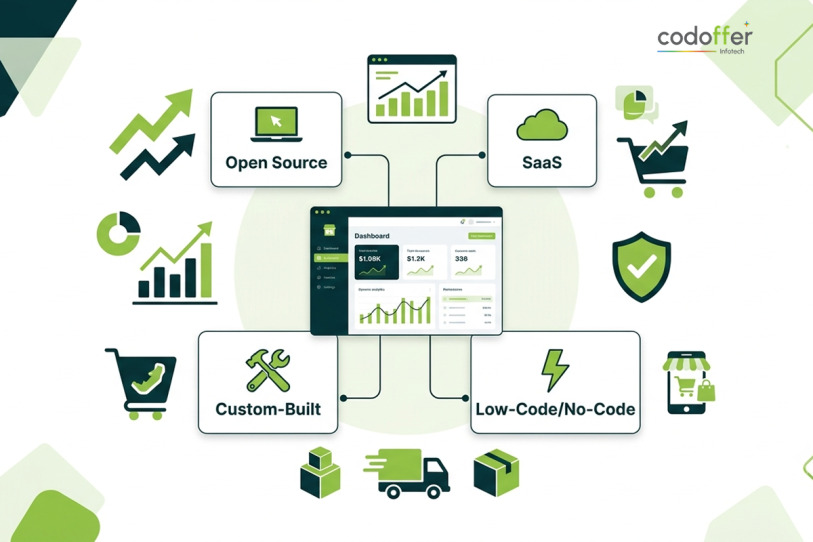
There are four common ways to build an online store. Each one serves a different business need and comes with its own strengths and limitations.

Development Model 1

Open-Source eCommerce

Open-source eCommerce gives you full access to the source code, so you can customize the platform extensively.

Popular open-source eCommerce platforms include WooCommerce, Magento Open Source,OpenCart and many more.

Best for: Businesses that need flexibility and control.

This model is popular with brands that want to shape their store exactly the way they want. It allows deep customization, but it also requires more technical management.

πŸš€

Why Businesses Choose It

Perfect for companies that need complete ownership, unlimited customization, and the freedom to build unique shopping experiences.

Challenges of Open-Source eCommerce

βš™οΈ

It needs technical knowledge to set up and manage properly.

πŸ”’

Regular updates, maintenance, and security checks are your responsibility.

🧩

Too many customizations can make the system harder to manage.

πŸ’°

Costs can rise when you need developers for fixes or new features.

Final Verdict

Open-source works well when you need freedom, but it is not ideal if you want a simple plug-and-play solution.

Development Model 2

SaaS (Hosted) eCommerce

SaaS eCommerce is a subscription-based platform where hosting, security, and updates are handled for you.

Popular SaaS (hosted) eCommerce platforms include Shopify, BigCommerce, Wix eCommerce, and Squarespace Commerce.

Best for: Startups and small businesses.

This is the easiest way to launch an online store quickly. It reduces technical overhead and lets business owners focus more on selling and marketing.

πŸš€

Why Businesses Choose It

Ideal for businesses that want to launch quickly without worrying about servers, maintenance, security, or software updates.

Challenges of SaaS eCommerce

🎨

Customization is often limited compared to open-source or custom-built platforms.

πŸ’³

Monthly subscription costs can add up over time.

πŸ”—

You depend on the platform provider for features, uptime, and updates.

🧩

Advanced business needs may require paid apps or workarounds.

Final Verdict

SaaS is great for speed and convenience, but it may feel restrictive as your business grows.

Development Model 3

Custom-Built eCommerce

Custom-built eCommerce solutions are typically developed using technologies such as Laravel, Node.js, React, Next.js, and custom APIs to meet unique business requirements.

Best for: Medium to large businesses with complex needs.

This is the most flexible option because everything is designed around your business model, workflows, and customer experience. It is often the right choice for brands that want a strong competitive advantage.

πŸš€

Why Businesses Choose It

Built specifically for businesses that need unique features, advanced workflows, complete scalability, and a personalized customer experience that standard platforms cannot provide.

Challenges of Custom-Built eCommerce

πŸ’°

Development cost is usually much higher.

⏳

It takes longer to design, build, and launch.

πŸ‘¨β€πŸ’»

You need experienced developers and ongoing support.

πŸ“ˆ

Maintenance, upgrades, and scaling must be managed carefully.

Final Verdict

Custom-built platforms deliver the most control, but they require more investment and planning.

Need a stronger team?

Hire Shopify Developers

Build and scale high-converting online stores with our expert Shopify developers tailored to your e-commerce business needs.

Hire Now

Development Model 4

Low-Code / No-Code eCommerce

Low-code/no-code eCommerce lets you build a store with drag-and-drop tools and minimal coding.

Best for: Beginners and small businesses wanting a quick launch.

This option is useful when you need to move fast and keep costs low. It is simple to use and works well for basic online stores.

πŸš€

Why Businesses Choose It

An excellent choice for entrepreneurs who want to launch quickly with minimal technical knowledge, lower upfront costs, and an easy-to-manage online store.

Challenges of Low-Code / No-Code eCommerce

🎨

Design and feature flexibility are limited.

βš™οΈ

It may not support complex workflows or custom logic.

πŸ“ˆ

Platform restrictions can create problems when the business scales.

πŸ”„

Some stores outgrow these tools very quickly.

Final Verdict

Low-code/no-code is a good starting point, but it may not be strong enough for long-term growth.

Quick Comparison

Main Challenges by Development Type

Each eCommerce development model has a different risk profile. The biggest challenge is not just building the store, but choosing a model that can support your future growth.

Open-Source

More Freedom
↓
More Maintenance

SaaS

Easier to Use
↓
Less Control

Custom-Built

Fully Tailored
↓
Higher Cost

Low-Code / No-Code

Fast to Launch
↓
Limited Scalability

Choose for Tomorrow, Not Just Today

The right choice depends on your budget, technical skills, business size, and long-term goals. A store that works well today should also be able to grow with your business tomorrow.

Frequently Asked Questions

FAQs

Here are answers to some of the most common questions businesses ask before choosing an eCommerce development model.

1

Which eCommerce development type is best for beginners?

SaaS and low-code/no-code platforms are usually best for beginners because they are faster to launch and easier to manage.

2

Which type gives the most control?

Custom-built and open-source eCommerce give the most control because they allow deeper customization.

3

Which type is cheapest to start?

Low-code/no-code and SaaS usually cost less at the beginning, but long-term costs can vary depending on growth and upgrades.

4

Is custom-built eCommerce worth it?

Yes, if your business has complex needs, unique workflows, or long-term scaling goals that standard platforms cannot support.

?

What is the biggest challenge in eCommerce development?

The biggest challenge is balancing cost, flexibility, speed, and scalability while choosing the right platform for your business.

Choose the Right Platform with Confidence

Every eCommerce business has different goals. Understanding the strengths and limitations of each development model will help you make a smarter decision today and build a store that can grow with your business tomorrow.

Build Your Future with Codoffer

Ready to Build an eCommerce Store That Grows With Your Business?

If you want an eCommerce website built for growth, flexibility, and performance, Codoffer can help. Codoffer specializes in custom-built eCommerce solutions designed to fit your business goals, support your workflows, and create a stronger online presence.

A custom-built store can give you more control over branding, features, and scalability, which makes it a smart choice for businesses planning long-term growth. To learn more, visit Codoffer.

Why Choose Codoffer?

βœ“ Custom-Built eCommerce Solutions
βœ“ Scalable Architecture
βœ“ Business-Focused Development
βœ“ Long-Term Growth & Support

E-Commerce Development Services β†’ Get Your Free Consultation