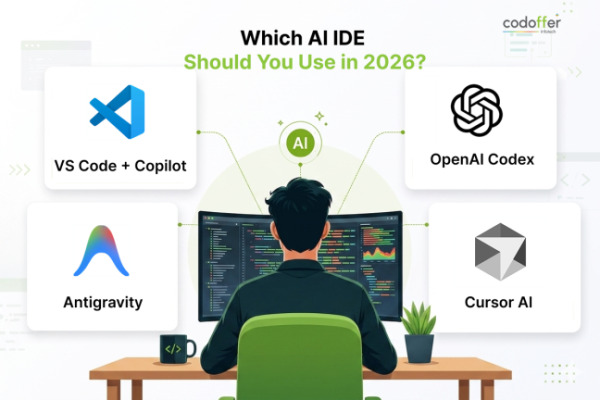
How to Pick the Perfect AI Coding Agent in 2026
June 30, 2026 · by Pankti Sheth · Industry Insights
Choosing the right AI coding agent in 2026 is no longer about following hype. This blog explains a practical evaluation process based on code quality, development speed, context understanding, cost, developer experience, workflow integration, and security. Learn how Codoffer tests multiple AI coding agents, assigns the best tools to backend, frontend, and marketing teams, and continuously re-evaluates new AI tools to stay ahead.
AI is moving at breakneck speed, and software development is changing faster than ever. With new coding agents coming out almost every month, it's hard to know which one to pick. Instead of just following the hype, teams should use a simple, step-by-step process to find the right fit.
At Codoffer, we keep things simple: we test different agents, see how they do, give the best ones to our teams, and keep looking for even better tools as they appear.
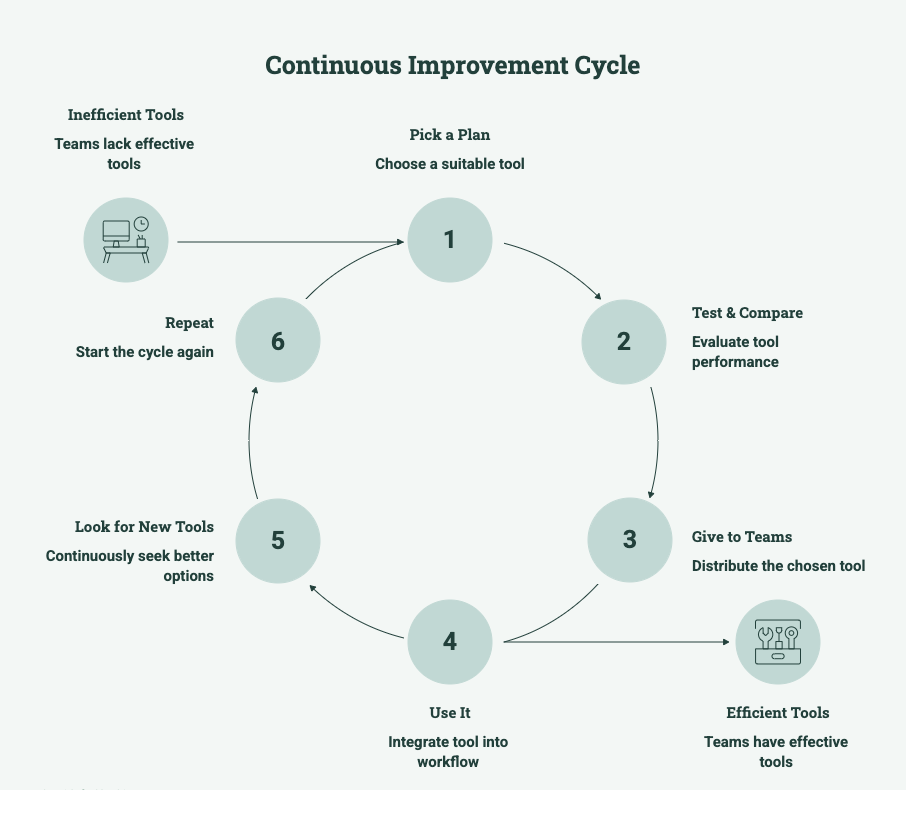
The AI Coding Agent Evaluation Cycle
The process is a never-ending loop:
Pick a Plan → Test & Compare → Give to Teams → Use It → Look for New Tools → Repeat
Instead of sticking with one tool forever, teams should always compare new options and switch to a better one as soon as it comes along.
. Code Quality And Accuracy
The first thing to look at is how well the agent actually writes code.
Ask yourself these questions:
- Is the code clean and easy to manage?
- Does it understand how the whole project is built?
- Does it save time on fixing bugs?
From what we've seen, here are the top choices:
- Backend Development: Claude Code
- Frontend Development: Codex
- Marketing & Content Tasks: ChatGPT, Per
Using the right tool for the specific job usually works much better than trying to make one tool do everything for everyone.
2. Development Speed
A good coding agent should help you work faster without giving you more work to clean up.
Here is what we noticed:
- Working on Mobile: Claude and Codex are great here.
- Command Line Tools: Claude and Gemini are strong picks.
- Coding Editor Plugins: Claude and Codex feel very natural to use.
- Managing Git Work: Codex has this built right in.
3. Context Understanding
Knowing how your code fits together is now one of the most important things to check.
Look for these things:
- Ability to remember a lot of information at once
- Support for Model Context Protocol (MCP)
- Easy ways to connect to other tools
- Ability to automate your daily tasks
Claude stands out because it can:
- MCP support
- Connectors
- Skills
- Hooks for custom actions
These features help AI understand big projects and do more difficult work for you.
4. Cost Efficiency
The price of these agents can be very different depending on which one you choose.
Think about:
- The monthly cost
- How many people on your team need it
- Whether you pay for what you use
- How well does it grow with your company
For example:
- Standard plans often start around $20/month with usage limits.
- Claude may require multiple seats for team usage.
- Codex business pricing can vary depending on usage.
- GitHub Copilot offers flexible team scaling and model choices.
The cheapest tool isn't always the best deal. Look at how much more work your team can get done, not just the monthly bill.
5. Developer Experience
Even the smartest AI tool won't help if your developers find it annoying to use.
Important things to check:
- Does it work inside the tools they already use?
- Can they use it from the command line?
- Is it easy to look at and understand?
- Does it fit into how they normally work?
Top performers:
- Claude
- Codex
Claude is great because it combines chat and coding in one place. Codex is better for people who want deep Git support and tools made just for developers.
6. Integration With Existing Workflows
The best AI coding agent should fit right into how you already build software.
Check how well it works with:
- GitHub
- IDE compatibility
- CI/CD workflows
- Team collaboration tools
GitHub Copilot is a good choice because it lets you use different AI models while keeping your normal workflow.
7. Security And Privacy Considerations
Don't forget about security when picking an agent.
Make sure you know:
- Where your data is being sent
- If your code is being used to train the AI
- If it follows all the necessary rules and standards
Some companies are careful about which models they use for safety reasons. Tools like OpenRouter can help you try different models while keeping things consistent and safe.
Final Thoughts
In 2026, there isn't just one "best" AI agent for everyone.
The right choice depends on your team, your budget, and what you need it to do. Instead of just doing what everyone else is doing, build a process to find what works for you.
At Codoffer, the strategy is simple:
Test → Look at Results → Assign → Start Using → Check Again → Repeat
This way, your team will always have the best tool for the job one that is fast, smart, affordable, easy to use, and safe.
Frequently Asked Questions (FAQs)
1. How do I choose the right AI coding agent for my team?
Start by evaluating key factors such as code quality, accuracy, development speed, context understanding, cost efficiency, developer experience, workflow integration, and security. The best AI coding agent depends on your team's specific requirements rather than popularity.
2. Is one AI coding agent enough for an entire organization?
Not always. Different teams often have different needs. For example, backend developers may prefer Claude Code, frontend developers may benefit from Codex, while marketing teams might use ChatGPT or Perplexity for content creation and research.
3. Why is context understanding important in AI coding agents?
Context understanding helps AI coding agents work with large codebases, maintain coding standards, and generate more accurate outputs. Features like MCP support, connectors, and long context windows improve overall productivity and reduce errors.
4. Are AI coding agents secure for enterprise use?
Security depends on the provider and deployment model. Organizations should review data handling policies, privacy controls, compliance standards, and model training practices before adopting any AI coding agent, especially for sensitive projects.
5. How often should companies re-evaluate AI coding agents?
The AI landscape changes rapidly, with new tools and updates released frequently. Companies should continuously monitor performance, test emerging AI coding agents, and reassess their technology stack to ensure they are using the most effective solution available.